
Site and material reviewed
Confirm the incoming tile, quantity, delivery position, equipment entrance, ground conditions, and overhead clearance.
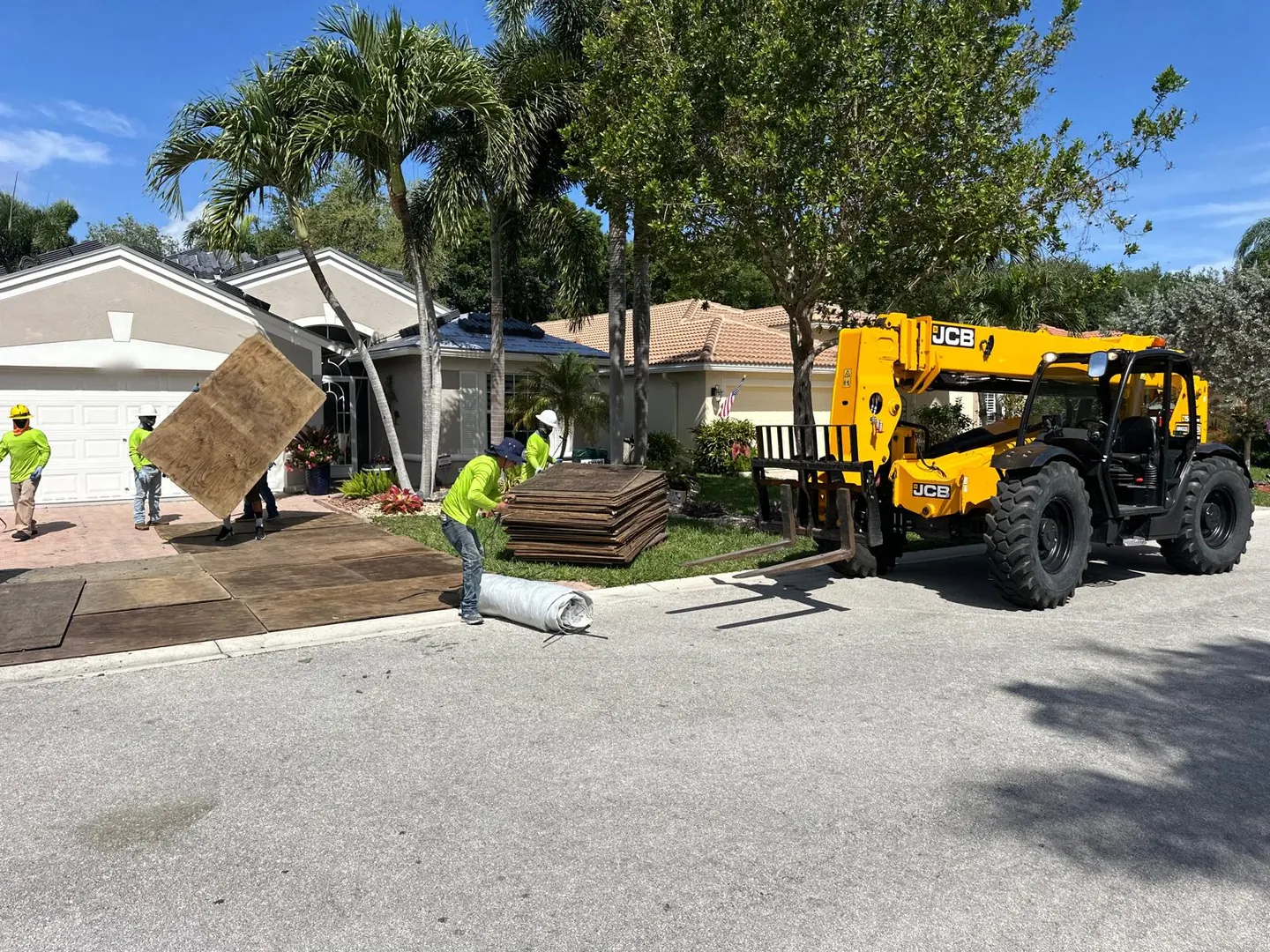
Ground to rooftop · Miami-Dade County
MMJ provides rooftop tile loading for roofing jobs in Miami and Miami-Dade County. Compact urban lots, occupied re-roofs, and route-south timing make the staging plan and the roof-ready window the two items that decide most Miami loads.
Fast contractor quote
Send the job basics now. MMJ will review the route, site access, and requested scope before confirming availability and pricing.
Local loading planning
Neighborhoods such as Little Havana, Shenandoah, Coral Way, and Flagami combine narrow driveways, street parking, and close neighbors. The expressway brings the equipment to the area; the lot decides where the telehandler can stand and which roof sections it can reach.
The request should show the legal truck position, the telehandler's working ground, driveway and swale edges, overhead lines, roof elevations, and the placement zones. Because Miami is the longest leg of MMJ's route south, the roof-ready time and receiving window should be confirmed before a date is requested.
The road brings the equipment to the property. Current site photos determine whether the proposed loading setup can be reviewed.
Miami loading process
Roof loading begins only after the material, equipment access, roof-ready time, and contractor-directed placement plan are confirmed.
Confirm the incoming tile, quantity, delivery position, equipment entrance, ground conditions, and overhead clearance.
The roofing contractor supplies the roof-ready time, elevations, loading side, placement zones, and on-site contact.
MMJ raises and places the agreed tile under the confirmed scope. The roofing crew remains responsible for installation.
Miami setup conditions
These details help MMJ review the property-side loading scope separately from the transportation route.
Show where the truck and telehandler may stand legally, including street parking, traffic conditions, and the driveway approach.
Many Miami loads are re-roofs on occupied homes. Identify landscaping, vehicles, and neighboring property close to the working area.
Confirm the roof-ready time, material arrival, elevations, tile quantity, and placement zones so the load fits the scheduled route south.
Before loading in Miami
Nearby availability depends on the exact site, incoming material, equipment access, roof readiness, scope, and requested date.
Need the tile transported too?
Rooftop loading can be reviewed with an MMJ delivery or as a defined jobsite scope. A delivery request includes the released order, pickup point, route, and jobsite handoff details.
Miami loading questions
Yes. Miami-Dade's High-Velocity Hurricane Zone shapes which tile products suppliers release, and re-roofs are the most common request. MMJ places the released tile in the contractor-directed rooftop zones; code and installation remain with the roofing contractor.
Narrow-street requests in neighborhoods like Little Havana and Shenandoah are reviewed from current photos: legal staging, driveway width, overhead lines, and the firm working ground. Confirmation depends on the actual lot, not the neighborhood name.
Miami jobs ride MMJ's scheduled routes south, roughly two and a half hours on I-95 or the Turnpike depending on traffic. The roof-ready window goes in the request first so the equipment, material, and crew line up on the same route day.